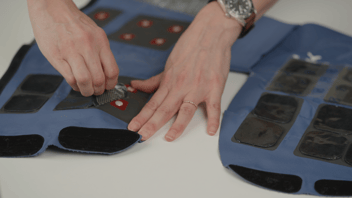
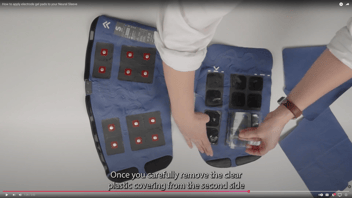
The Cionic Neural Sleeve includes a set of Training Programs designed to support common lower-limb strengthening and mobility patterns. Each program targets specific muscle groups (or muscle pairs) to help reinforce movement quality, build strength, and support day-to-day functions like walking, standing up, and navigating stairs.
Below you’ll find a clear overview of each program, which muscles it uses, and the main benefits you can expect.
Training Program Guide
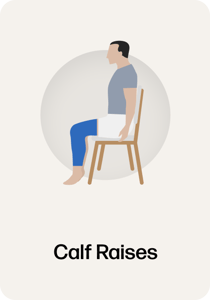
Calf Raises
Stimulates: Calf (Gastrocnemius)
What it supports:
Strengthens push-off power for walking (the “propulsion” phase)Helps with stability when standing and shifting weight
Can support endurance for longer periods on your feet
Common goals: stronger push-off, better standing balance, improved lower-leg strength.
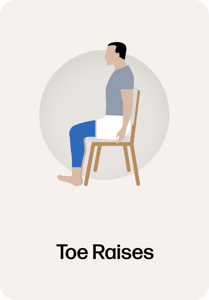 Toe Raises
Stimulates: Shin (Tibialis Anterior)
What it supports:
Improves toe clearance during walking (helps reduce tripping risk)Supports controlled foot placement at heel strike
Helps reduce “foot slap” by improving controlled lowering of the foot
Common goals: better dorsiflexion, safer gait, smoother steps.
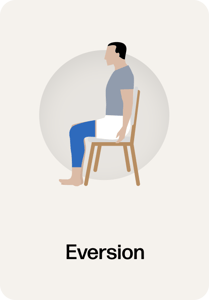 Eversion (not supported on S0 and XS sleeves)
Stimulates: Shin (Tibialis Anterior)
What it supports:
Helps train control at the ankle for side-to-side stabilityCan support more confident stepping, especially on uneven ground
Reinforces ankle control that can contribute to better foot placement
Common goals: ankle control, stability, and improved foot positioning.
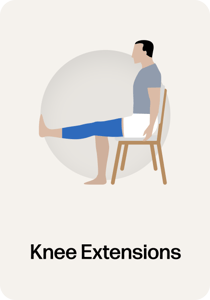 Knee Extension
Stimulates: Quadriceps
What it supports:
Builds strength needed to straighten the kneeSupports stability during standing and mid-stance in walking
Helps with tasks like rising from a chair and stair climbing
Common goals: stronger knee control, better standing stability, easier transitions.
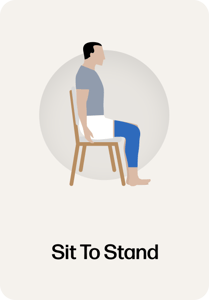 Sit To Stand
Stimulates: Quadriceps
What it supports:
Strengthens the primary muscles used to stand up from a chairTrains coordinated knee extension during a functional movement
Can improve confidence in repeated transitions (sit ↔ stand)
Common goals: easier chair transfers, better functional strength, improved independence.
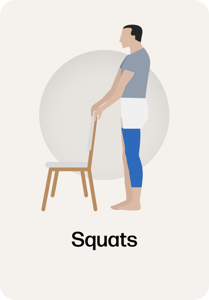
Squats
Stimulates: Quadriceps
What it supports:
Strengthens legs for functional tasks and overall lower-body capacitySupports knee stability under load
Helps build endurance for standing, walking, and daily activities
Common goals: general leg strength, stability, and endurance.
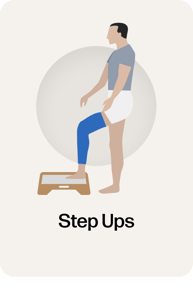
Step Ups
Stimulates: Quadriceps + Shin (Tibialis Anterior)
What it supports:
Strengthens the leg for stair stepping and curb negotiationSupports toe clearance and foot placement while stepping up
Reinforces coordination between lifting the foot and driving through the leg
Common goals: improved stair performance, better toe clearance, stronger step-up.
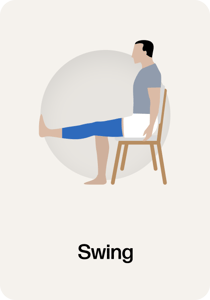
Swing
Stimulates: Quadriceps + Shin (Tibialis Anterior)
What it supports:
Supports the swing phase of gait (when the leg moves forward)Helps with knee control and toe clearance at the same time
Can improve step timing and reduce dragging
Common goals: smoother swing phase, less toe drag, improved heel strike.
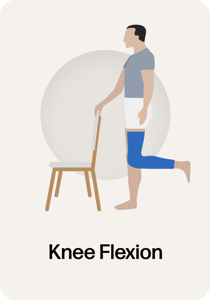
Knee Flexion
Stimulates: Hamstring
What it supports:
Builds strength for bending the kneeSupports leg control during walking and transitions
Can help with unlocking the knee as it prepares to move forward
Common goals: improved knee bend, better gait coordination, improved foot clearance during swing phase.
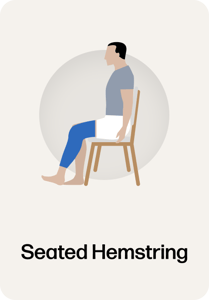
Seated Hamstring
Stimulates: Hamstring
What it supports:
Targets hamstring activation in a stable seated positionHelps build strength and improve muscle engagement without full weight-bearing
Useful for focused strengthening and motor retraining
Common goals: isolated hamstring strengthening, improved activation, and increased knee control.
|
Knee Flexion (functional note): If your training plan includes both Knee Flexion and Seated Hamstring, they target the same muscle group but can feel different: seated versions often emphasize controlled activation, while other formats may feel more “movement-pattern” oriented depending on your setup. |
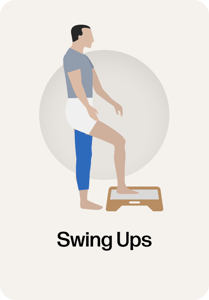
Swing Ups
Stimulates: Hamstring + Shin (Tibialis Anterior)
What it supports:
Reinforces knee bend and toe clearance togetherSupports safer forward leg movement during walking and stair climbing
Can help reduce dragging and improve step consistency
Common goals: better swing mechanics, reduced trip risk, improved walking and stair climbing fluidity.
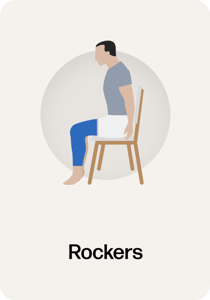
Rockers
Stimulates: Calf (Gastrocnemius) + Shin (Tibialis Anterior)
What it supports:
Trains ankle movement through a controlled range (forward/back “rocking”)Helps improve ankle mobility and control during stance
Can support smoother weight shift and more stable stepping
Common goals: ankle control, smoother gait transitions, improved coordination between push-off and swing phases of walking.
Quick reference table (program → muscle focus)
- Calf-focused: Calf Raises
- Shin-focused: Toe Raises, Eversion
- Quadriceps-focused: Knee Extension, Sit To Stand, Squats
- Hamstring-focused: Knee Flexion, Seated Hamstring
- Combined patterns:
- Calf + Shin: Rockers
- Quads + Shin: Step Ups, Swing
- Hamstring + Shin: Swing Ups
Tips for getting the most out of these programs
- Match the program to your goal:
- Toe drag / foot clearance → Toe Raises, Swing, Step Ups, Swing Ups, Rockers
- Standing up / stairs → Squats, Sit To Stand, Step Ups, Swing Ups, Knee Extension
- Push-off strength → Calf Raises, Rockers
- Toe drag / foot clearance → Toe Raises, Swing, Step Ups, Swing Ups, Rockers
- Prioritize quality over intensity: aim for smooth, controlled movement, especially in gait-related programs.
-
Progress gradually: if you’re early in training, start with simpler, more isolated programs (e.g., Seated Hamstring, Knee Extension, Toe Raises) before combining patterns (e.g., Swing, Step Ups).
|
Note: During onboarding, your Cionic Mobility Specialist will select and enable the Training Programs that are most appropriate for your goals, mobility, and comfort. If there’s a specific program you don’t currently see (or you’d like to try a different one), you can always reach out to your Mobility Specialist or schedule a follow-up appointment to have it enabled. |
Scotts Valley, CA 95066